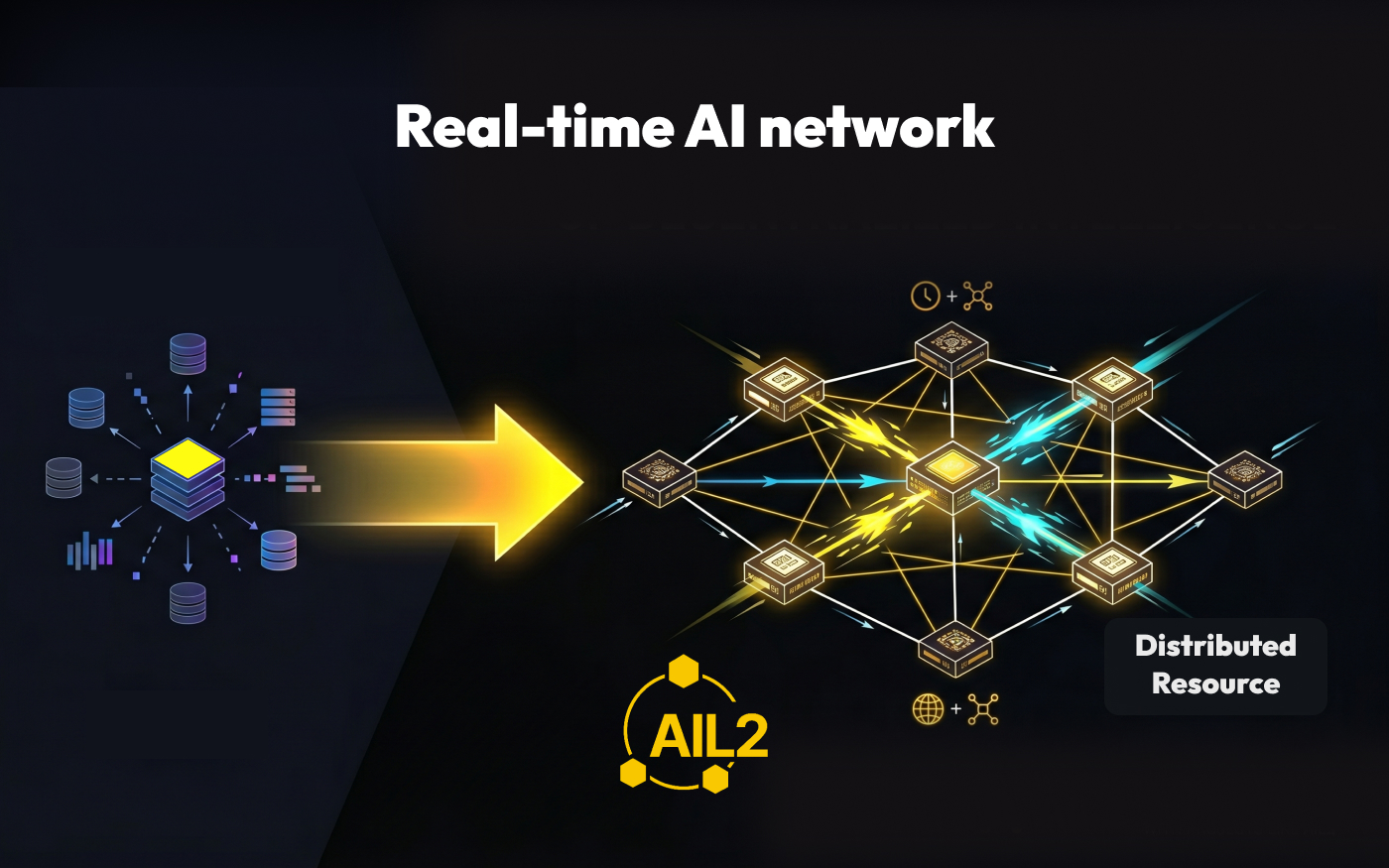
Real-Time AI Networks: The Next Evolution of Decentralized Intelligence
Artificial intelligence is evolving beyond static models and offline processing.
The next stage is real-time intelligence.
The Shift Toward Real-Time AI
Modern applications require instant responses. From AI agents to interactive systems, latency is becoming a critical factor in user experience and system performance.
This shift is pushing infrastructure to evolve.
Challenges of Real-Time AI
Real-time AI systems require:
• Low latency computation
• Distributed resource coordination
• High availability infrastructure
Traditional centralized systems struggle to meet these requirements at scale.
Decentralized Real-Time AI Networks
Decentralized infrastructure offers a new approach by distributing computation closer to users and enabling flexible resource allocation.
This model allows AI systems to respond faster while maintaining scalability.
Projects like AIL2 are exploring how decentralized coordination layers can support real-time AI networks across multiple blockchain ecosystems.
The Future of Intelligent Systems
As AI becomes more interactive and autonomous, real-time capabilities will define next-generation applications.
The infrastructure supporting these systems must be fast, scalable, and decentralized.
Real-time AI networks represent the next evolution of decentralized intelligence.
Explore AIL2 decentralized AI infrastructure:
https://ail2.org/en
#VerifiableAI #Web3AI #AIL2 #RealTimeAI #AIInfrastructure