Why AI Inference Is Becoming More Expensive Than Training — and What Comes Next
For years, the AI industry focused on one thing: training bigger models.
But in 2026, the narrative has shifted.
The real bottleneck is no longer training — it is inference.
Recent industry developments show that running AI models at scale is becoming more expensive and more complex than building them.
Here are five key reasons why AI inference is becoming the dominant challenge.
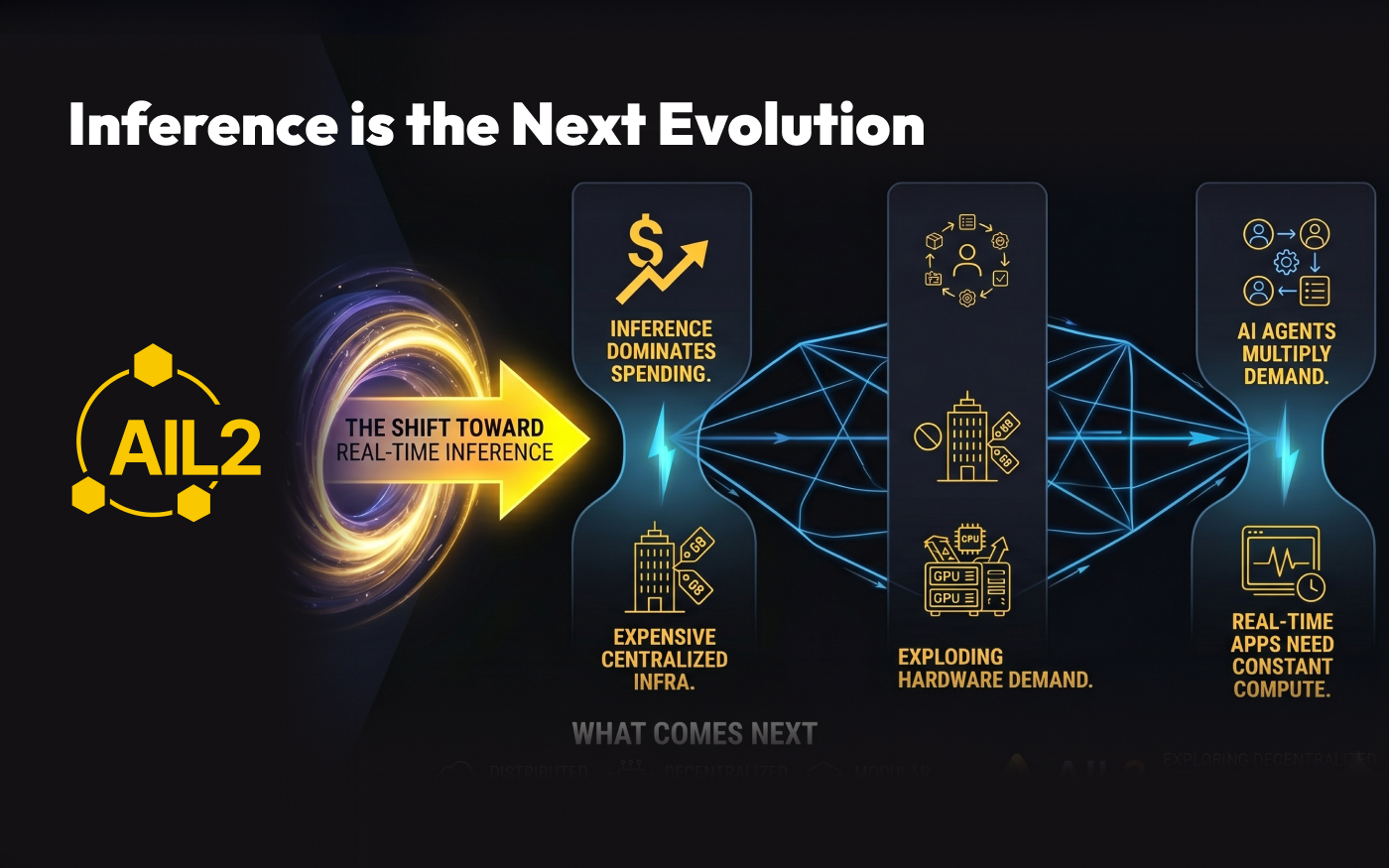
1. Inference Now Dominates AI Spending
AI systems generate costs every time they are used. As adoption grows, inference quickly surpasses training in total spending.
In large-scale deployments, inference has become the primary cost driver of AI infrastructure.
2. AI Agents Multiply Compute Demand
AI agents are not single-step systems.
They execute multi-step workflows, often requiring dozens or even hundreds of inference calls per task. This significantly increases compute demand and cost.
3. Centralized Infrastructure Is Becoming Expensive
Major AI providers are raising prices and limiting access as infrastructure costs rise.
This trend signals a shift from “cheap AI” to a more resource-constrained ecosystem.
4. Hardware Demand Is Exploding
The demand for CPUs and GPUs is increasing rapidly due to inference workloads, with shortages and price increases already emerging.
5. Real-Time Applications Require Constant Compute
Unlike training, inference runs continuously.
Every AI-powered product — from chat systems to agents — depends on real-time computation, creating persistent infrastructure pressure.
What Comes Next
The industry is beginning to explore alternatives:
• Distributed compute networks
• Decentralized GPU infrastructure
• Modular AI coordination layers
AIL2 aligns with this shift by enabling decentralized coordination across chains and compute resources, offering a scalable path beyond centralized bottlenecks.
Explore how AIL2 supports scalable AI infrastructure:
https://ail2.org/en
#AIinference #AIcost #AIInfrastructure #Web3AI #DecentralizedAI