From Data Centers to Distributed Compute: The Rise of AI DePIN Infrastructure
Artificial intelligence is no longer limited by algorithms. It is limited by infrastructure.
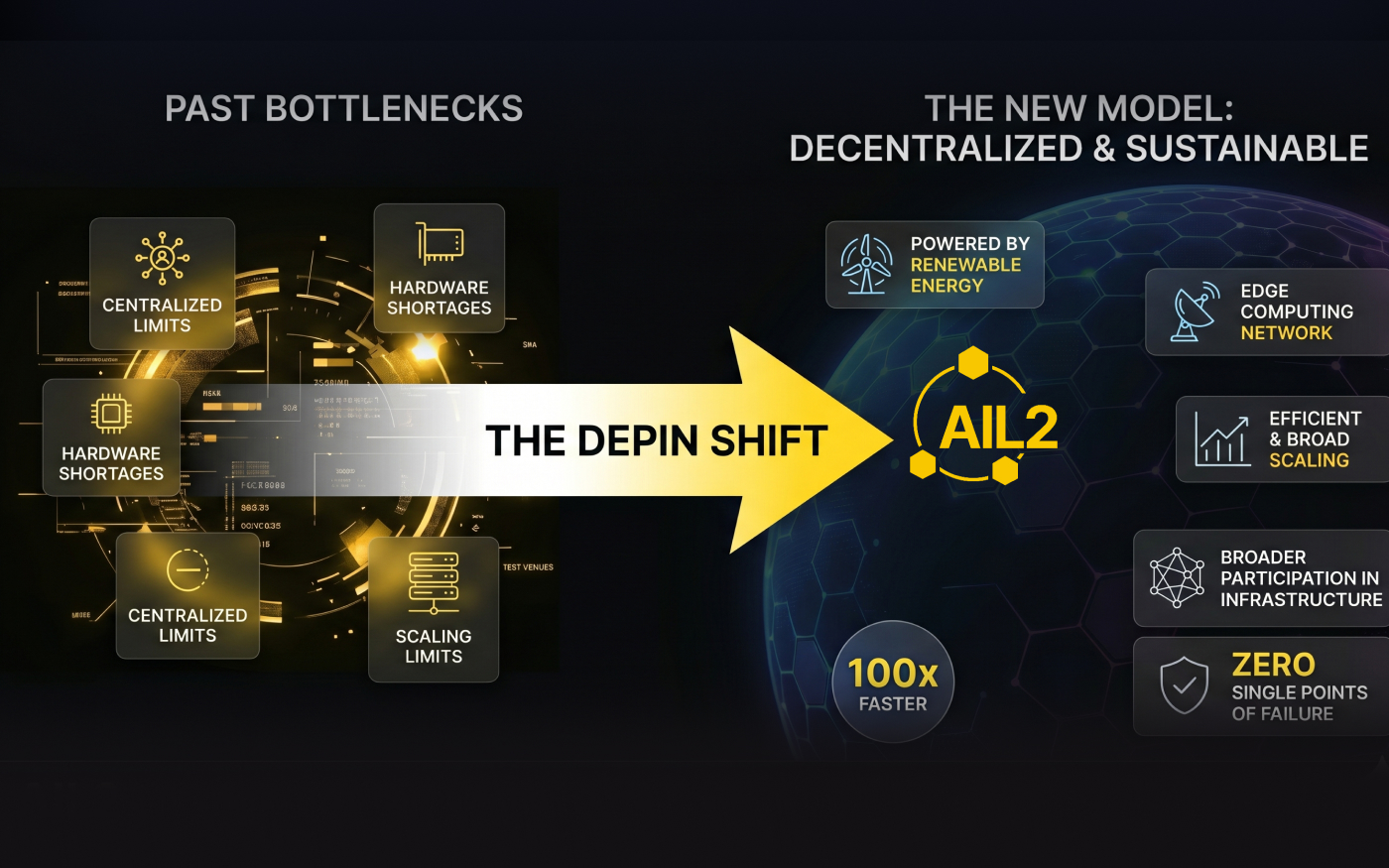
For years, AI development has depended on centralized data centers operated by a small number of large providers. While this model enabled rapid progress, it is now facing structural limits.
Energy constraints, hardware shortages, and rising costs are forcing the industry to rethink how AI infrastructure is built.
A new model is emerging.
Distributed AI compute networks — often referred to as DePIN — are reshaping how computational resources are deployed and accessed.
Instead of relying on massive centralized facilities, these systems distribute compute closer to where it is needed. New infrastructure projects are already deploying decentralized GPU networks powered by renewable energy and edge locations to improve efficiency and scalability.
This shift has several advantages.
It reduces latency by bringing computation closer to users. It increases resilience by removing single points of failure. And it allows broader participation in AI infrastructure through open networks.
For Web3 ecosystems, this model is especially important.
Decentralized systems require infrastructure that aligns with their principles — open, distributed, and trust-minimized.
AIL2 fits into this transformation by acting as a coordination layer that can connect distributed compute resources with multi-chain ecosystems.
Rather than replacing existing infrastructure, it enables decentralized intelligence to scale across networks.
As AI demand continues to grow, the transition from centralized data centers to distributed compute will define the next generation of infrastructure.
Learn more about AIL2 decentralized AI infrastructure:
https://ail2.org/en
#DePIN #GPU #AIInfrastructure #Web3AI #DecentralizedAI